
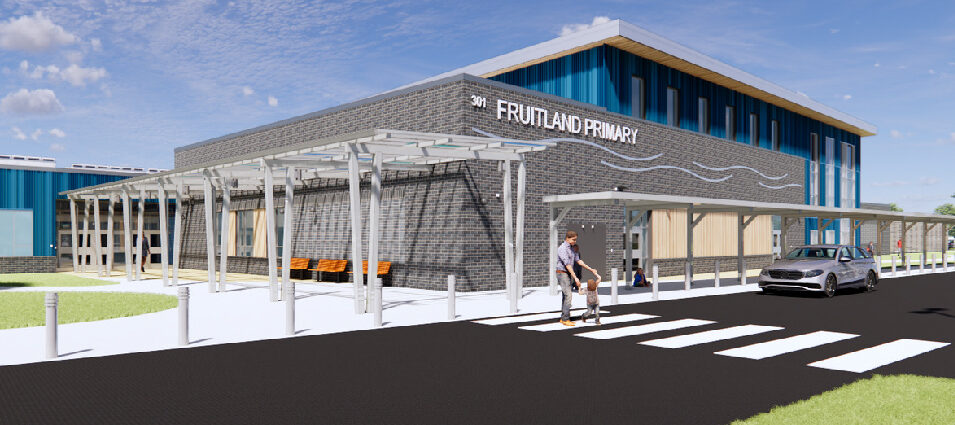
CASE STUDY: Net-Zero-Ready Future for Fruitland Primary School
Fruitland, Maryland | K-12 | 100,000 SF | 682-kW Solar PV | In Progress
Download a copy of our case study: Engineering a Net-Zero-Ready Future for Fruitland Primary School

RTM Engineering Consultants delivered engineering services for the new all-electric school, replacing a 1970s-era facility challenged by aging building systems, overcrowding, and limited ADA accessibility. Designed to serve approximately 630 pre-kindergarten through second‑grade students, the new building achieves exceptional energy performance goals, targeting net‑zero operation with no on‑site fossil fuel use.
CHALLENGE
The Fruitland Primary School required a forward‑looking design centered on long‑term efficiency, safety, and operational flexibility. RTM Engineering Consultants developed coordinated mechanical, electrical, plumbing and fire protection (MEP/FP) systems to support daily operations and prepare the school for future energy demands. Creating a net‑zero‑ready facility meant balancing high energy efficiency with limiting the size and cost of the 682-kW solar photovoltaic (PV) system.
The team evaluated passive strategies such as building orientation, envelope insulation, and the solar reflective index of exterior materials to help reduce energy use intensity. RTM prioritized high‑efficiency equipment, heat recovery strategies, demand‑control ventilation, and controls that respond to actual building loads.
Key Challenges:
- Complex site conditions
- Tight coordination requirements
- Evolving sustainability goals
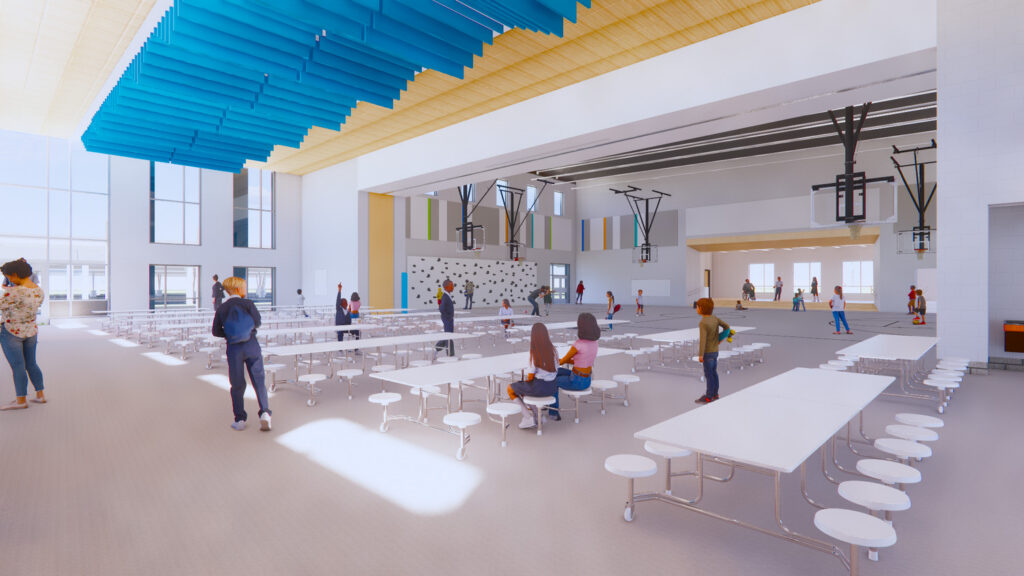
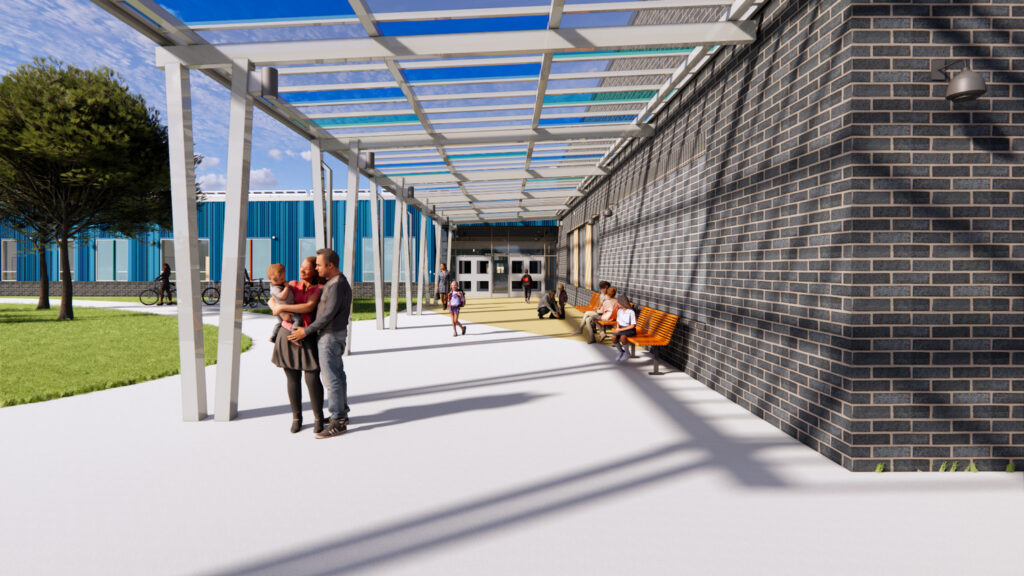
All renderings courtesy of Grimm + Parker
APPROACH
RTM developed a flexible MEP/FP framework to guide early design decisions and long‑term planning. The team evaluated site utilities, building orientation, geothermal field placement, and future expansion needs. Energy modeling was completed for multiple envelope assemblies and for mechanical and plumbing strategies, including equipment efficiencies, heat recovery options, ventilation approaches, and networked lighting with daylight harvesting.
RTM also designed the electrical infrastructure and PV system needed to offset projected annual energy use. Conceptual layouts were prepared for major equipment, geothermal heat exchangers, PV arrays, inverter locations, and energy‑monitoring systems.
SOLUTION
RTM delivered an integrated MEP/FP design that supported the school’s sustainability goals and long‑term operational needs.
Electrical: The electrical design included a roof‑mounted 682‑kW PV system sized to offset annual energy use and infrastructure for a portable generator, enabling half of the building to operate as an emergency shelter.
Plumbing/Mechanical: Mechanical and plumbing systems met efficiency targets and maintained indoor air quality through a geothermal HVAC system, zone‑level controls, and dedicated outdoor air systems with energy recovery.
Fire Protection: Systems met all code requirements, and load‑management provisions supported high‑performance operation throughout the building’s life cycle.