Sustainability is a growing priority in hospitality development, with building electrification increasingly viewed as a key component. Hospitality brands are leaning into this concept, actively using it as a differentiator. However, in rural or mountainous areas around ski resorts and other high-elevation lifestyle or adventure destinations, limited utility infrastructure, complex site conditions, and high energy demands can make all-electric systems significantly more difficult to execute.
RTM supports a strategic approach rooted in demand reduction, early integration, and performance-driven MEP design to ensure that sustainability goals remain both ambitious and achievable.
WHY ELECTRIFICATION MATTERS FOR HOSPITALITY
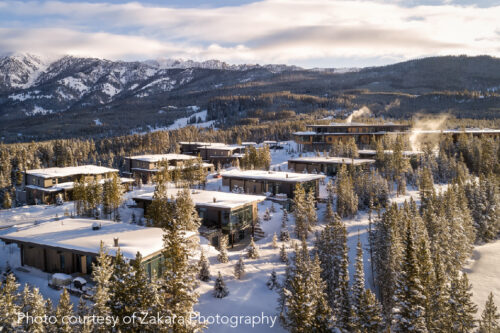
Hotels and resorts operate around the clock, relying on energy-intensive systems for HVAC, water heating, commercial kitchens, pools, spas, snowmelt, and other systems. These loads are especially difficult to electrify in heating-dominated remote areas with constrained utility capacity and seasonal variability.
Effective electrification in hospitality means more than swapping fuel sources. It requires right-sized, carefully engineered MEP systems that balance guest comfort and amenity within the available infrastructure limits.
THE VALUE OF EARLY PLANNING AND DEMAND REDUCTION
Defining sustainability benchmarks, and subsequently electrification goals, at the start of a project is essential. Late-stage sustainability decisions often lead to costly rework or inefficient outcomes, if the goals can even be achieved at that point.
Many high-elevation resort locations could be considered “rural,” and often the available utility capacity cannot support a brute-force electrification approach, especially when multiple properties are pursuing the same goal. To complicate matters, many of these sites also lack the spatial capacity for meaningful on-site power generation, such as solar photovoltaics.
Early collaboration among owners, architects, utilities, and MEP teams helps align expectations and identify potential constraints. From there, reducing baseline energy use becomes the first step, through modeling, system optimization, and smarter design decisions that cut demand before renewable systems are added.
A PRACTICAL, PERFORMANCE-BASED APPROACH
All-electric hotels and resorts must balance sustainability aspirations with technical and operational realities, as well as guest comfort and expectations. RTM’s engineering approach addresses the full complexity of these projects by designing MEP systems that are efficient, constructible, fully integrated, and tailored to each site.

PROJECT OUTCOMES
- Integrated electrification strategies for complex hospitality environments
- Early coordination with utilities and stakeholders to identify and manage constraints
- Reduced energy loads through passive design, programming, and equipment right-sizing
- MEP systems that support comfort, operations, and energy goals
- Design solutions aligned with sustainability, performance, and brand identity
FROM AMBITION TO EXECUTION
RTM brings technical depth and a collaborative mindset to hospitality electrification, designing mechanical, electrical, plumbing, lighting, and technology systems that transform sustainability targets into real-world performance. Let RTM help you deliver your next high-performance hospitality development.
MEET AN EXPERT IN THIS TOPIC
Eric Rubottom, Principal at RTM, brings decades of experience in electrical and technology systems design, management, and consulting across a wide range of project types. His leadership ensures strategic oversight, quality assurance, and innovative, client-focused solutions that drive successful, sustainable outcomes.
 Eric Rubottom, Principal
22+ years of experience in electrical and technology systems engineering design in luxury hospitality